Why contract templates aren’t enough — and what legal teams should use instead
 Connor Amor-Bendall

Contract templates can improve consistency and reduce drafting errors for lawyers, but in reality, templates alone rarely solve drafting consistency, knowledge management, or negotiation challenges. Law firms and in-house legal teams need a broader system for drafting, reviewing, and managing legal knowledge.
TL;DR
- Contract templates reduce drafting errors but do not solve complex legal drafting challenges.
- Most template initiatives fail because legal experts cannot agree on a single “best” version.
- One-size-fits-all templates struggle to accommodate negotiation realities and risk preferences.
- Legal teams need clause libraries, drafting guidance, and centralized knowledge alongside templates.
- Law firms and in-house teams face different drafting pressures but share the same template limitations.
- Legal knowledge should be maintained centrally and continuously improved.
- AI-assisted drafting and review can help legal teams move beyond static templates.
- LawVu Draft helps legal teams draft, review, refine, and manage legal knowledge directly inside Microsoft Word.
Why contract templates are not enough
Contract templates are standardized legal documents designed to make lawyers’ lives easier by accelerating the contract draft process, improving consistency, and reducing errors across legal work.
Why it matters for law firms
Law firms need consistency across lawyers, offices, and practice groups while still preserving flexibility for client-specific requirements.
Why it matters for in-house legal teams
In-house teams need scalable drafting processes that support business velocity without increasing legal risk.
The limitation
Templates can standardize common language, but they cannot capture every commercial, regulatory, or negotiation scenario.
Creating great templates is also a struggle for many legal teams and firms. It’s a task that in theory, shouldn’t be difficult, but in execution can be a real headache.
Why template projects often fail
First attempts at templating
Contract template creation generally looks the same for most legal teams and law firms.
A lawyer copies an old file into a new document. Next, the client-specific information is replaced, irrelevant clauses removed, and additional matter-specific clauses added.
This may work a few times, but eventually, something gets missed. A cross-reference breaks. A customer’s name remains in the document. An important clause disappears.
The first time this happens, it may be considered an unfortunate hiccup; the second, it becomes a risk, and the legal team realize they need a standardized template.
While this sounds straightforward, legal teams quickly discover that creating and maintaining effective templates is far harder than expected.
The complexities of contacts
Legal drafting is inherently nuanced, as each clause can be interpreted by an individual. Different lawyers, clients, and businesses have different risk tolerances, negotiation experiences, jurisdictions, and drafting philosophies which all play into a contract.
While one lawyer may insist on highly technical wording to address conflict-of-law concerns, another may prefer simpler language to reduce negotiation friction.
While both approaches are defensible, this dual reality creates a fundamental problem: there is no perfect contract template, as legal practice requires variation.
Understanding this will save you a huge amount of time in the long run. Multiple valid drafting approaches often exist for the same issue.
Why contract template management breaks down and how to fix it
Identify what you need from a contract
In-house counsel and private practice lawyers require different things from contract templates.
For law firms: the scalability challenge
Law firms generally handle large volumes of similar contracts while also delivering highly customized legal advice pertaining to each client.
This juxtaposition creates a real tension between efficiency and customization.
If contract templates are too rigid, lawyers will simply create an alternative version of the document that better suits their clients’ needs. Over time, this leads to multiple versions of similar contracts emerging, creating inconsistency and fragmentation across the firm.
A law firm’s drafting process must carefully balance standardization with individual legal judgment.
The limitation
Standardized drafting reduces risk, improves quality control, and helps junior lawyers work more efficiently. But templates alone cannot capture every client preference or negotiation scenario.
Ultimately, law firms want consistency across lawyers and practice groups while still allowing flexibility for client-specific requirements.
For in-house legal teams: the governance challenge
In-house legal teams face a different problem. Business users often reuse old agreements because they are familiar and easy to access without getting the legal team involved. Even when approved templates exist, employees may choose an older document that appears similar to the current transaction.
This creates risks, including:
- Outdated legal language
- Missing compliance requirements
- Inconsistent commercial positions
- Information leakage from previous matters
Contract governance is crucial for in-house legal team to mitigate risk.
In-house legal teams want repeatable drafting processes that support business velocity and reduce legal risk by ensuring documents reflect current legal, regulatory, and business requirements.
The real solution: a legal drafting system
Whilst contact templates have their place in the legal workflow, as we’ve discussed above, they also come with a swathe of limitations.
Sure, templates are designed to handle most of the contract language that rarely changes from client to case. But the problem is that the minority is where friction usually occurs.
Clauses that cause the most friction are often provisions relating to liability, indemnities, limitations of liability, intellectual property, confidentiality, data protection, termination rights, and governing law.
For each of these clauses, lawyers will typically maintain multiple fallback positions depending on the transaction, counterparty, industry, jurisdiction, and risk profile of either their client or organization. It is simply implausible to include all those alternatives in a contract template.
Templates become long, difficult to navigate, and a nightmare to maintain. Every update requires changes across multiple documents, increasing the risk of outdated language remaining in circulation.
The solution is to treat contract templates as a starting point rather than trying to force something that doesn’t fit into being a complete solution. They should be seen as a first step to what can make a real impact: a legal drafting system.
The most effective legal teams are harnessing advanced drafting software that creates dynamic templates in conjunction with:
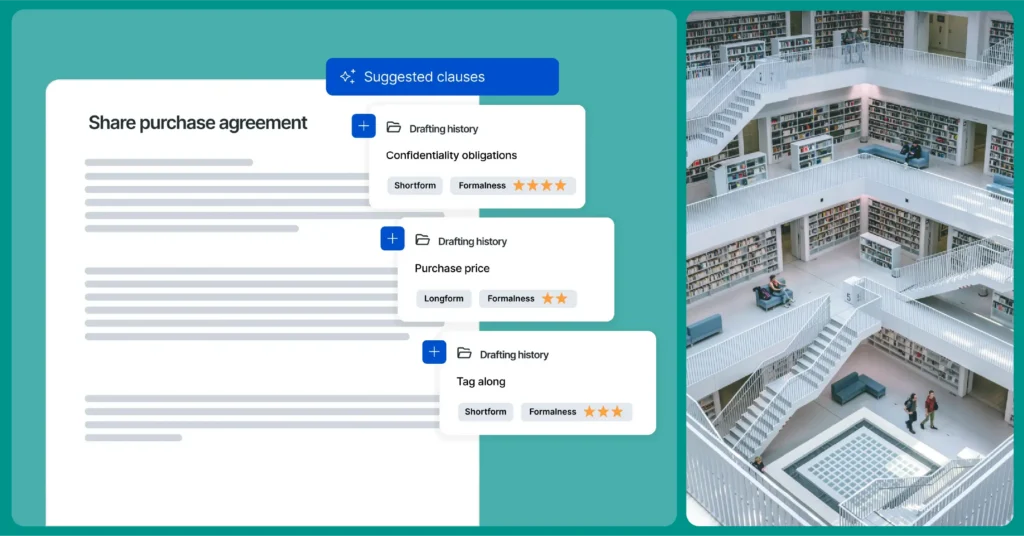
- Clause libraries
- Drafting guidance
- Legal playbooks
- Knowledge management
- Contract review processes
- AI-assisted drafting tools
Together, these components create a repeatable drafting system that scales more effectively than templates alone.
“We wanted to give our clients an easy way to get bespoke legal documents for matters that have a real impact in their lives. We quickly realised that making static Word documents available in a “fill-in-the-blanks” format was not the way to go. Not only because drafting legal documents is more than filling in a few fields, but more importantly because different clients have different needs and we wanted to be able to accommodate those needs. That’s why we realised very early on that we would need specialized document automation software.”
Joachim Vanspeybrouck, Partner – Wanted Law
Why clause libraries matter
A clause library is a centralized collection of approved clauses, legal positions, language and negotiation alternatives. They create one source of truth and mitigate risk by ensuring either legal teams or lawyers within a firm are using the same language and legal positioning.
Why it matters for law firms
Law firms need flexibility. Different clients have different risk tolerances, commercial priorities, and negotiation strategies. A clause library allows lawyers to quickly access approved alternatives without maintaining dozens of template variations. It also helps firms capture valuable drafting expertise and make it available to junior lawyers and new joiners.
Why it matters for in-house teams
In-house legal teams need consistency and governance. A clause library allows legal departments to standardize approved positions while still giving lawyers flexibility during negotiations. It also ensures that institutional knowledge is not lost when team members leave or responsibilities change.
The limitation
Clause libraries require ongoing maintenance and ownership.
A clause library is only valuable if it remains current. Without clear ownership and governance, libraries can become outdated and difficult to trust.
LawVu Draft helps legal teams maintain centralized clause libraries, surface approved alternatives during drafting, and keep legal language aligned across the organization without leaving Microsoft Word.
Why legal knowledge management matters
Many organizations focus on managing documents while neglecting the knowledge behind them.
Valuable legal knowledge often exists across multiple locations, including precedent documents, drafting notes, emails, negotiation guidance, internal policies, compliance frameworks, training materials, and individual lawyers’ experience.
That knowledge often includes:
- Drafting notes
- Approval requirements
- Negotiation guidance
- Compliance rules
- Preferred fallback positions
Over time, this information becomes fragmented across shared drives, document management systems, inboxes, and personal folders.
When lawyers cannot quickly access trusted guidance, they spend time recreating work that has already been done. The result is slower drafting, inconsistent risk positions, and duplicated effort across the team.
Legal knowledge management is the process of capturing, organizing, maintaining, and sharing institutional legal expertise.
Why it matters for law firms
For law firms, knowledge management improves efficiency, reduces duplicated effort, and helps lawyers deliver consistent advice. It also enables firms to scale expertise by making the experience of senior practitioners available to the broader team.
Why it matters for in-house teams
For in-house legal teams, knowledge management helps standardize decision-making and improve business responsiveness. Lawyers can quickly understand approved positions, escalation requirements, and preferred negotiation outcomes without searching across multiple systems.
The limitation
Knowledge has limited value when it is disconnected from daily workflows. If lawyers must stop drafting and search through multiple repositories to find answers, adoption drops and valuable information remains unused.
LawVu Draft helps legal teams access institutional knowledge directly within Microsoft Word, reducing context switching and helping lawyers find trusted answers where legal work happens.
What AI for law firms and in-house legal teams needs to do
Many lawyers see AI as simply a document generation tool. That view is too narrow.
The most valuable legal AI solutions do not only generate text; they help legal professionals apply institutional knowledge more consistently, make better decisions faster, and reduce time spent on repetitive work.
For law firms, AI should improve productivity while preserving legal judgment and client-specific advice.
For in-house teams, AI should help legal departments manage growing workloads without increasing headcount or risk.
The goal is not to replace lawyers. The goal is to help lawyers spend less time searching, formatting, reviewing, and rewriting so they can focus on higher-value legal work.
Draft
LawVu Draft can generate first drafts using approved legal language and organizational knowledge.
Instead of starting with a blank page or searching for previous agreements, lawyers can create high-quality first drafts using trusted content that reflects established drafting standards.
Review
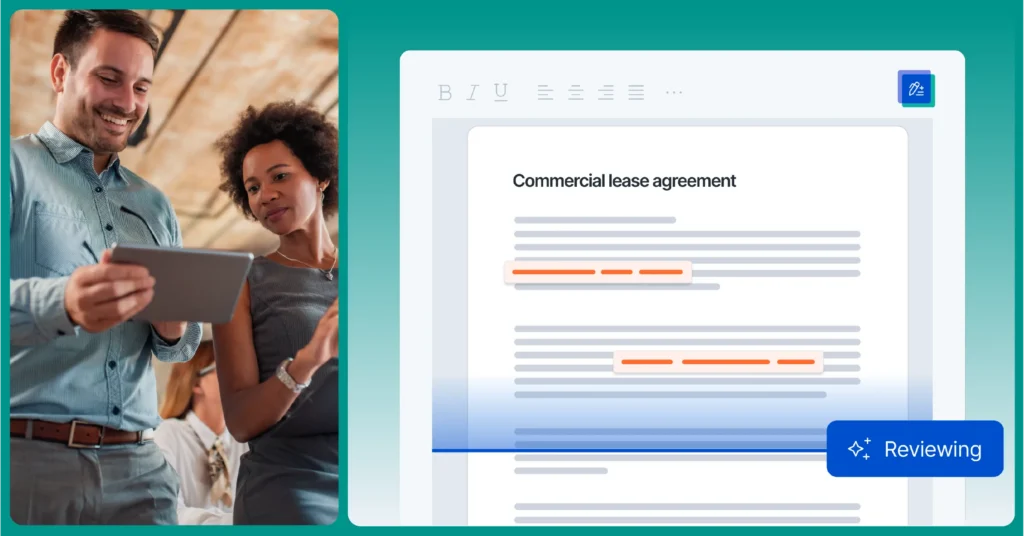
LawVu Draft can review contracts against internal standards and identify issues directly within Microsoft Word.
This helps legal teams accelerate review cycles, improve consistency, and focus attention on higher-risk provisions. According to LawVu Draft, legal teams can achieve up to 5x faster contract reviews.
Ask
LawVu Draft can answer drafting and negotiation questions using trusted organizational knowledge.
Rather than searching through precedent documents or internal guidance, lawyers can quickly access relevant answers and supporting information without leaving their drafting workflow.
Refine
LawVu Draft can improve wording, simplify language, and align documents with internal drafting standards.
This helps legal teams maintain drafting consistency while reducing the time spent on manual edits and formatting changes.
Knowledge
LawVu Draft can make legal knowledge accessible where drafting and review work happens.
Lawyers can access approved clauses, negotiation guidance, drafting notes, and organizational expertise without switching between systems. This helps transform legal knowledge from a static repository into an active drafting resource.
Why it matters
AI becomes most valuable when combined with templates, clause libraries, and legal knowledge management.
Templates provide structure. Clause libraries provide flexibility. Knowledge management provides context. AI helps lawyers access and apply all three more effectively.
Together, they create a modern legal drafting environment that is faster, more consistent, and easier to scale across both law firms and in-house legal teams.
“The breadth of options available for inserting different legal nuances into a document made us that much more capable of achieving our initial intention of accommodating our clients’ needs. Furthermore, we are a Belgian law firm which means that we are occasionally required to work in three different languages. Having LawVu Draft’s grammatical, multi-lingual support built into our documents allows us to service an even larger market.”
Pieter Pauwels, Partner – Wanted Law
Templates are a starting point, not the destination
Templates remain valuable.
They reduce common drafting errors, improve consistency, and accelerate routine legal work.
However, templates alone cannot solve knowledge management challenges, negotiation complexity, or drafting variability.
The most effective legal teams combine templates, clause libraries, legal knowledge management, and AI-assisted workflows to create a scalable drafting environment.
That approach supports both consistency and flexibility, which is ultimately what legal teams need.
Key takeaways
- Contract templates improve consistency but do not solve every drafting challenges.
- No single template can accommodate every negotiation scenario.
- Clause libraries provide flexibility while maintaining approved language.
- Legal knowledge management is critical for scalable drafting operations.
- Law firms and in-house legal teams face different template challenges but require similar solutions.
- AI-assisted drafting supports legal judgment rather than replacing it.
- Up-to-date legal knowledge is often more valuable than additional templates.
- Modern legal drafting systems combine templates, knowledge, and workflow support.